
Antennas and Beyond!
The Antenna Lab
Unlock the world of antenna design! This section offers engaging resources for educators and students, fostering a deeper understanding of antenna theory and practical applications.
-
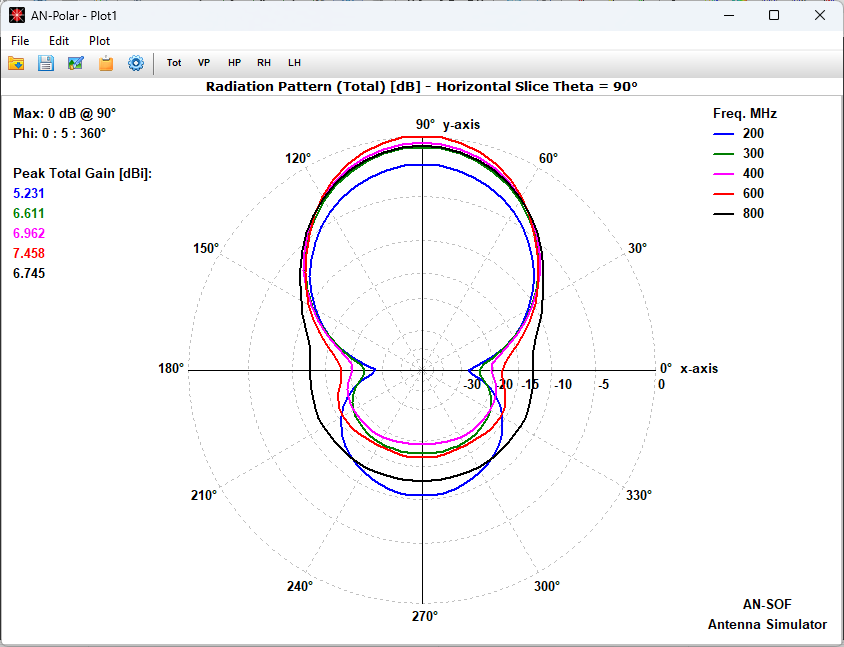
Antenna Far-Field Comparison using Multi-Slice and Multi-Frequency Plots
This guide explains how to leverage the advanced multi-slice and multi-frequency plotting capabilities of the AN-Polar application in AN-SOF (Version 11 and later). Learn how to compare antenna far-fields by overlaying up to five angular cuts or frequency steps in a single polar diagram, importing and exporting pattern data using .plr files to compare different…
-
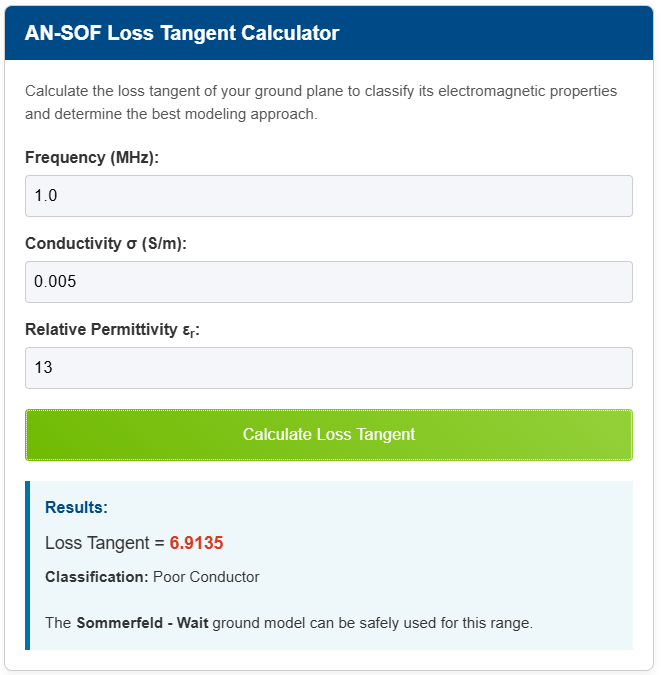
How to Select the Right Ground Plane Model
In computational electromagnetics, ‘one size does not fit all.’ The transition between a ground acting as a good dielectric versus a good conductor is governed by the Loss Tangent. This article provides a practical guide with embedded calculation and selection tools to select the most appropriate real ground plane model below an antenna elevated or…
-
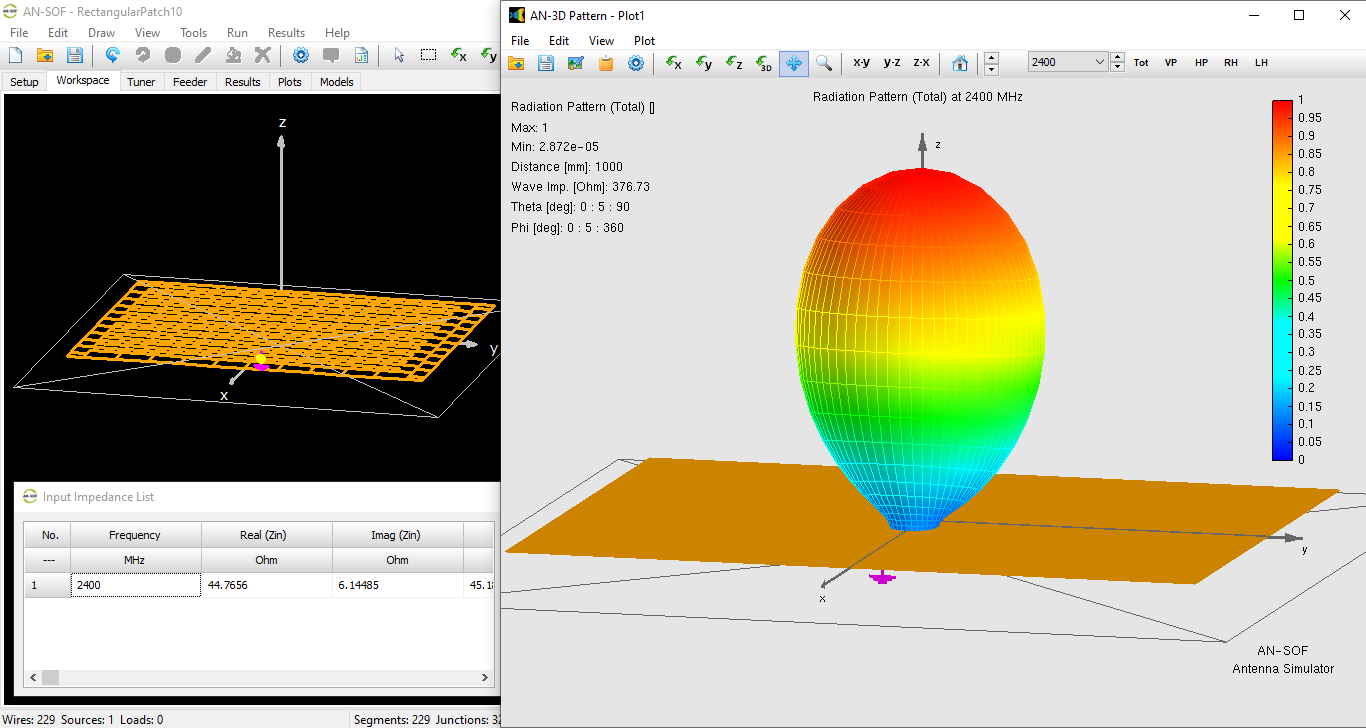
Rectangular Microstrip Patch Antennas: A Comparative Analysis of Transmission Line Theory and AN-SOF Numerical Results
This comprehensive study explores the design and electromagnetic behavior of the rectangular microstrip patch antenna, contrasting classical transmission line theory with AN-SOF numerical simulations. By evaluating resonance, input impedance, and the impact of finite vs. infinite substrates, the article details the specific areas where analytical formulas align with full-wave results and where complex phenomena like…
-

Can AI Design Antennas? Lessons from a 3-Iteration Yagi-Uda Experiment
Can AI really design antennas? We put it to the test, transforming chatbot suggestions into a working 3-element Yagi-Uda. Discover how AI accelerates design, where it stumbles, and why your expertise still makes the difference.
-

New Tools in AN-SOF: Selecting and Editing Wires in Bulk
Discover the new wire selection and editing tools in AN-SOF! From bulk selection with the Selection Box to precise control via the Tabular Input window, these features streamline antenna modeling. Modify multiple wires effortlessly and enhance your workflow. Explore these powerful tools today!
-
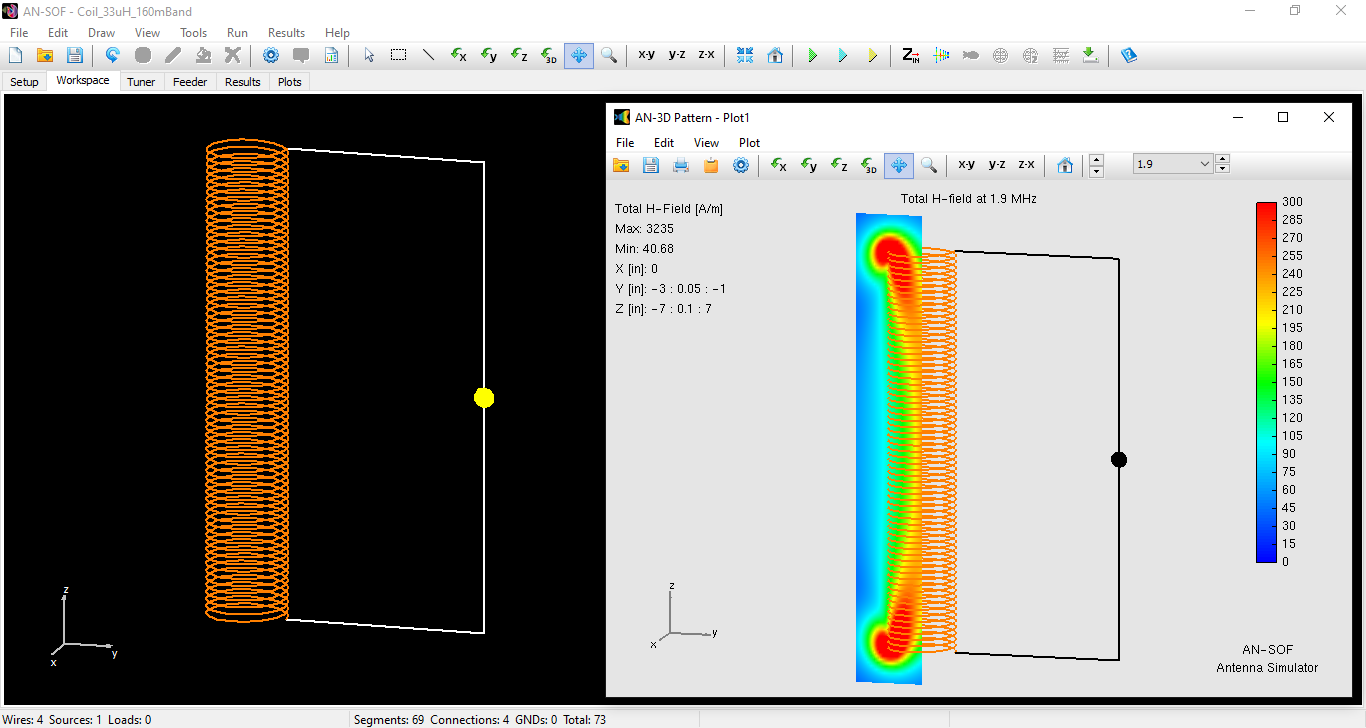
Beyond Analytical Formulas: Accurate Coil Inductance Calculation with AN-SOF
Traditional coil inductance calculations often rely on simplified approximations. AN-SOF offers a more accurate approach by considering factors like non-uniform magnetic fields, conductor losses, and complex coil geometries. By using AN-SOF, you can obtain precise inductance values, visualize magnetic field and current distributions, to improve your coil designs.
-

Linking Log-Periodic Antenna Elements Using Transmission Lines
Dive into the world of advanced antenna design with our latest tutorial! Discover the art of connecting Log-Periodic Antenna Elements using Transmission Lines in the AN-SOF Antenna Simulator.
-
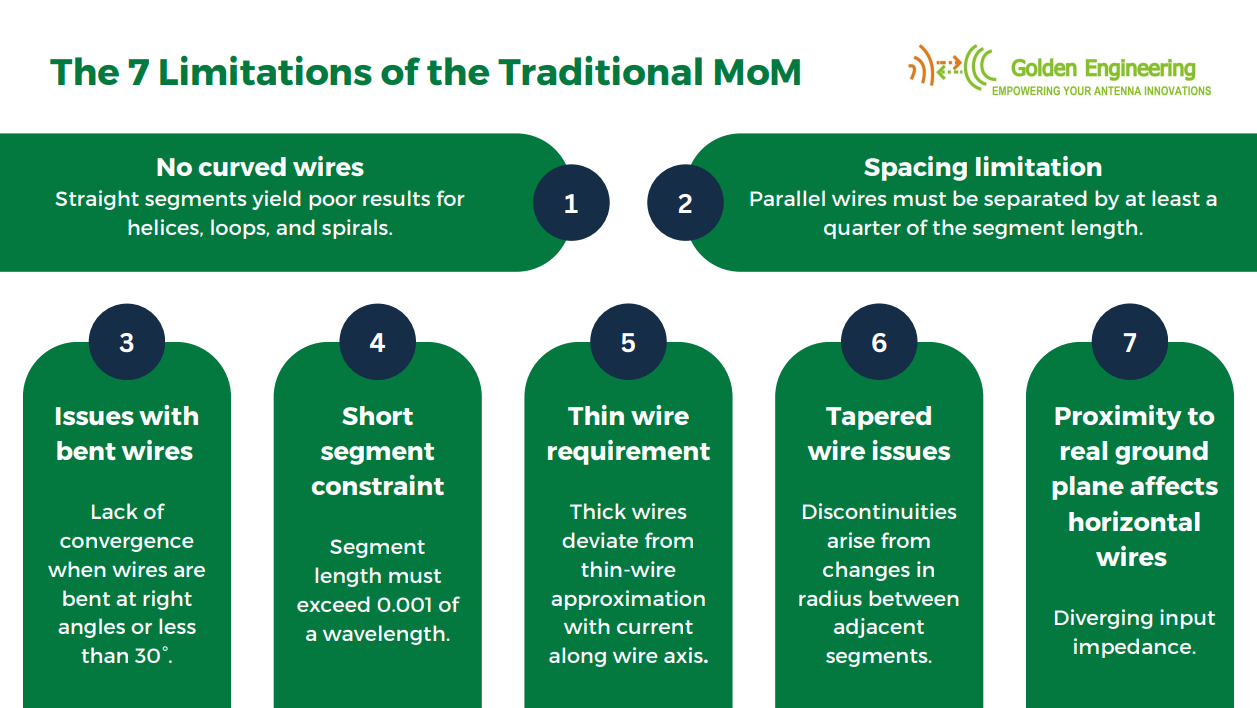
The 7 Limitations of Traditional MoM — and Why Measurement-Grade Conformal MoM Exists
Traditional Method of Moments codes still carry geometric and numerical constraints that degrade accuracy on the antennas professionals actually design. Conformal MoM with Exact Kernel removes them.
-
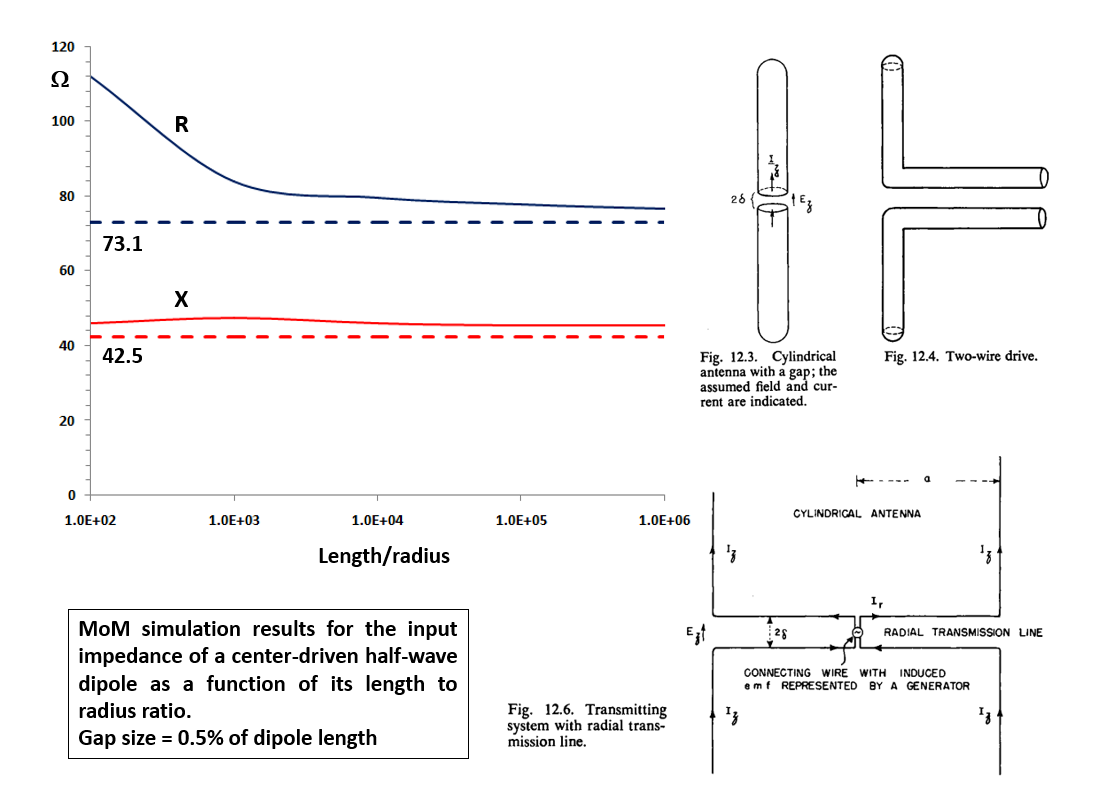
Linear Antenna Theory: Historical Approximations and Numerical Validation
Discover the vital role of historical theoretical results alongside advanced numerical calculations in accurately approximating current distribution on linear antennas.
-
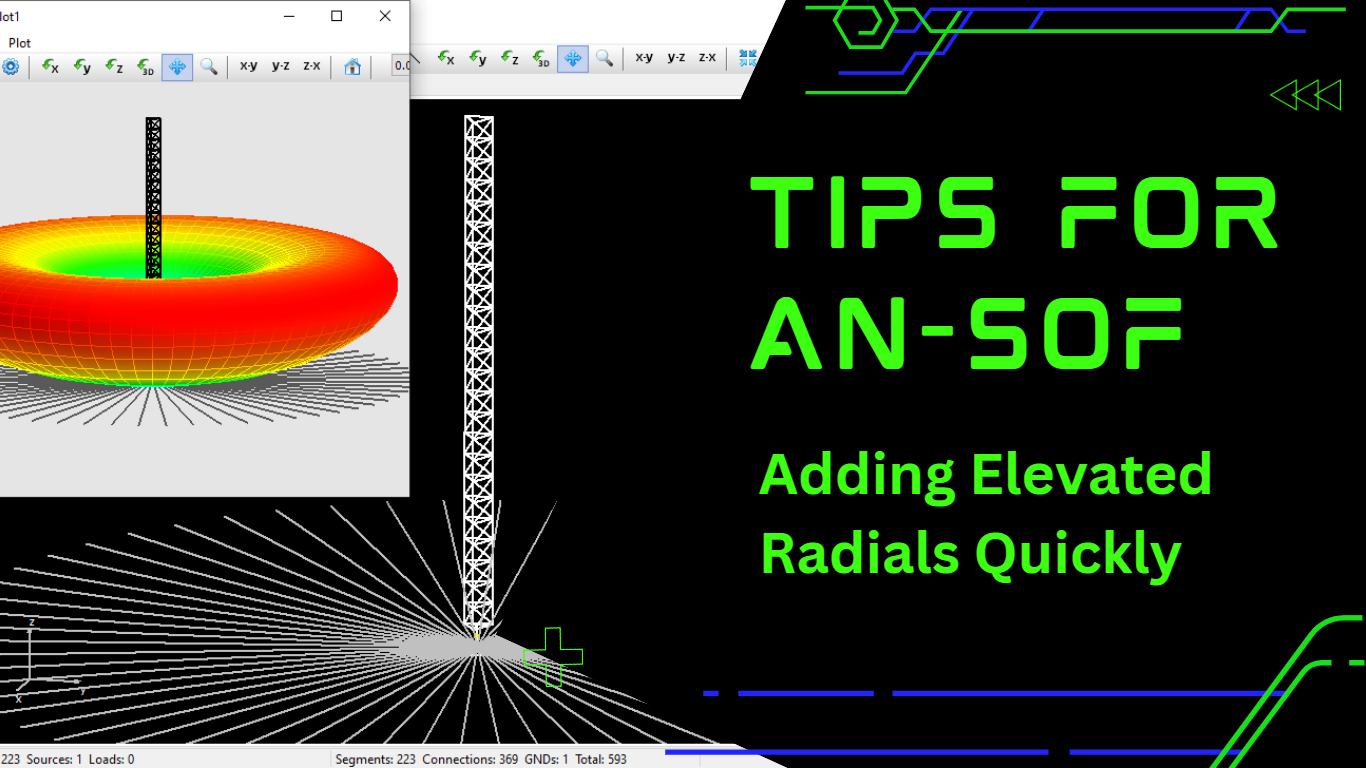
AN-SOF Mastery: Adding Elevated Radials Quickly
Rev up your AN-SOF skills with this video tutorial featuring two fast methods for adding elevated radials.
-

Front-to-Rear and Front-to-Back Ratios: Applying Key Antenna Directivity Metrics
Understand the difference between Front-to-Rear (F/R) and Front-to-Back (F/B) ratios, key metrics for antenna directivity. Learn how to calculate and interpret these values using AN-SOF software. Improve your antenna designs with this essential knowledge.
-
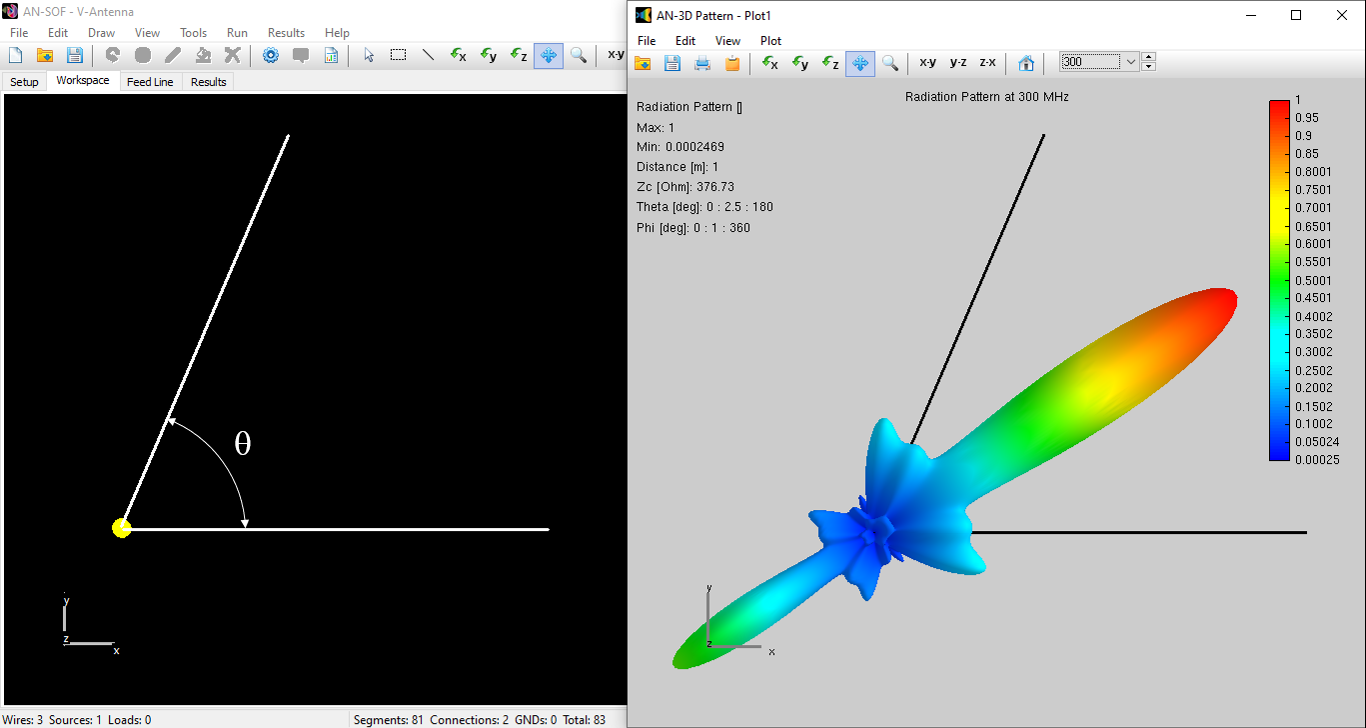
Validating V Antennas: Directivity Analysis with AN-SOF
This article validates AN-SOF’s results against established formulas for V antennas, highlighting its advanced modeling capabilities. We explore optimal angles, directivity enhancements, and precise calculations, making AN-SOF a powerful tool for RF engineers, ham radio enthusiasts, and antenna designers.
-
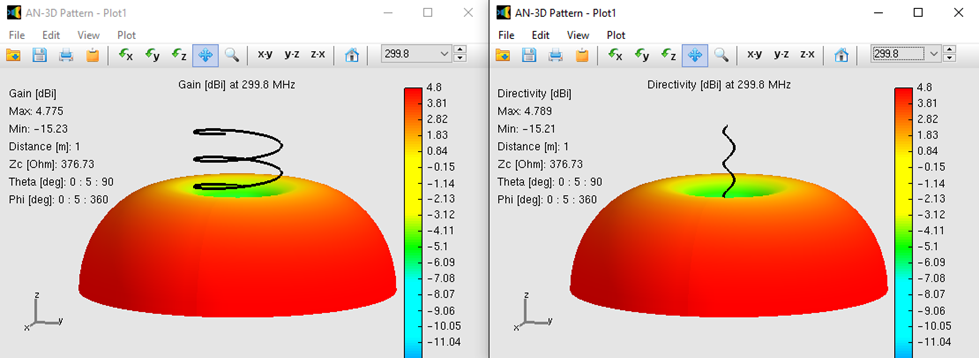
Helical Antennas in Normal Mode: Theoretical Limits and Numerical Validation
Validate the electromagnetic behavior of the helical antenna in its Normal Mode through this detailed study referencing the foundational work of John D. Kraus. By analyzing the transition from a 3D helical structure to its theoretical loop-dipole equivalent, this article demonstrates how AN-SOF accurately captures the broadside radiation pattern and the asymptotic gain limit. Essential…
-

Precision Modeling of Small Loop Antennas: Validating the Conformal Method of Moments (CMoM)
Validate the precision of the Conformal Method of Moments (CMoM) through this rigorous study of small loop antennas. By comparing simulated circular and square loops against classical asymptotic theory, we demonstrate how AN-SOF accurately models radiation resistance and directivity in the low-frequency limit, where antenna size is a tiny fraction of a wavelength. This article…
-
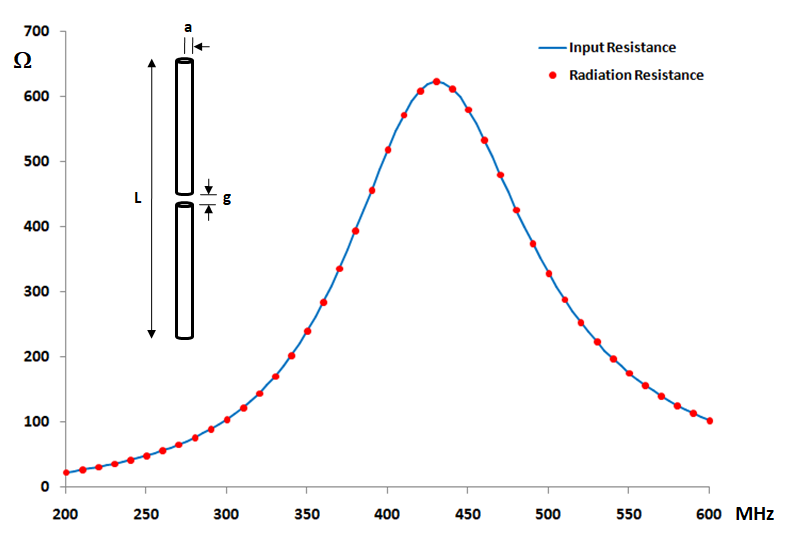
Energy Conservation and Gain Convergence in Cylindrical Dipoles: A Numerical Validation Study
Verify the numerical precision of the AN-SOF engine through this detailed validation study of cylindrical dipoles. By testing the principle of energy conservation, comparing input resistance against far-field radiation resistance, we demonstrate a near-perfect correlation with errors below 0.035%. This article also explores gain convergence, establishing that 10 segments per wavelength are sufficient to achieve…
-
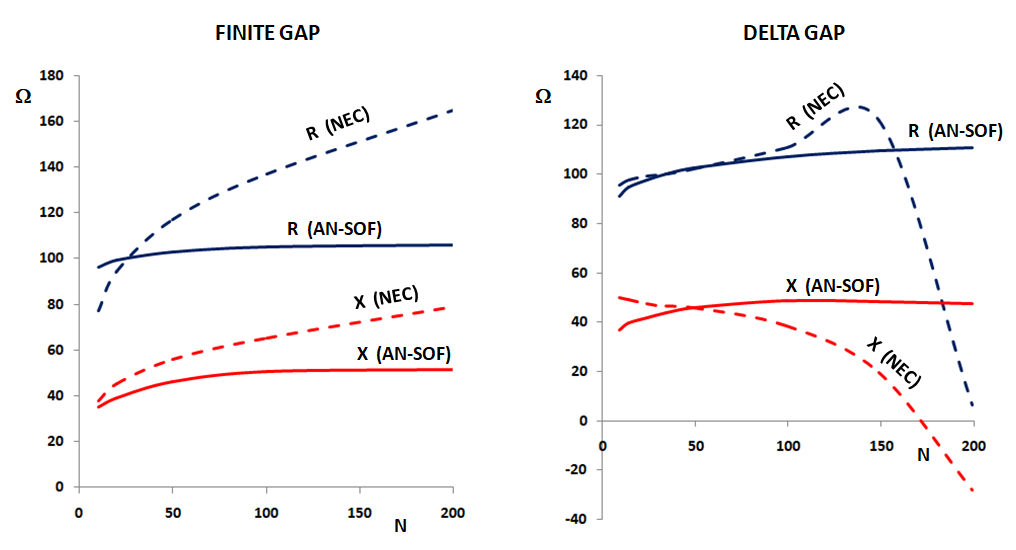
Numerical Convergence and Stability of Input Impedance in Cylindrical Dipoles
Examine the numerical stability of cylindrical dipole modeling through this rigorous convergence study. By analyzing input impedance as a function of discretization density and length-to-radius ratios, this article demonstrates how AN-SOF overcomes the traditional divergence issues found in many MoM codes, such as NEC-2. While older engines often fail to provide convergent reactance values when…
-
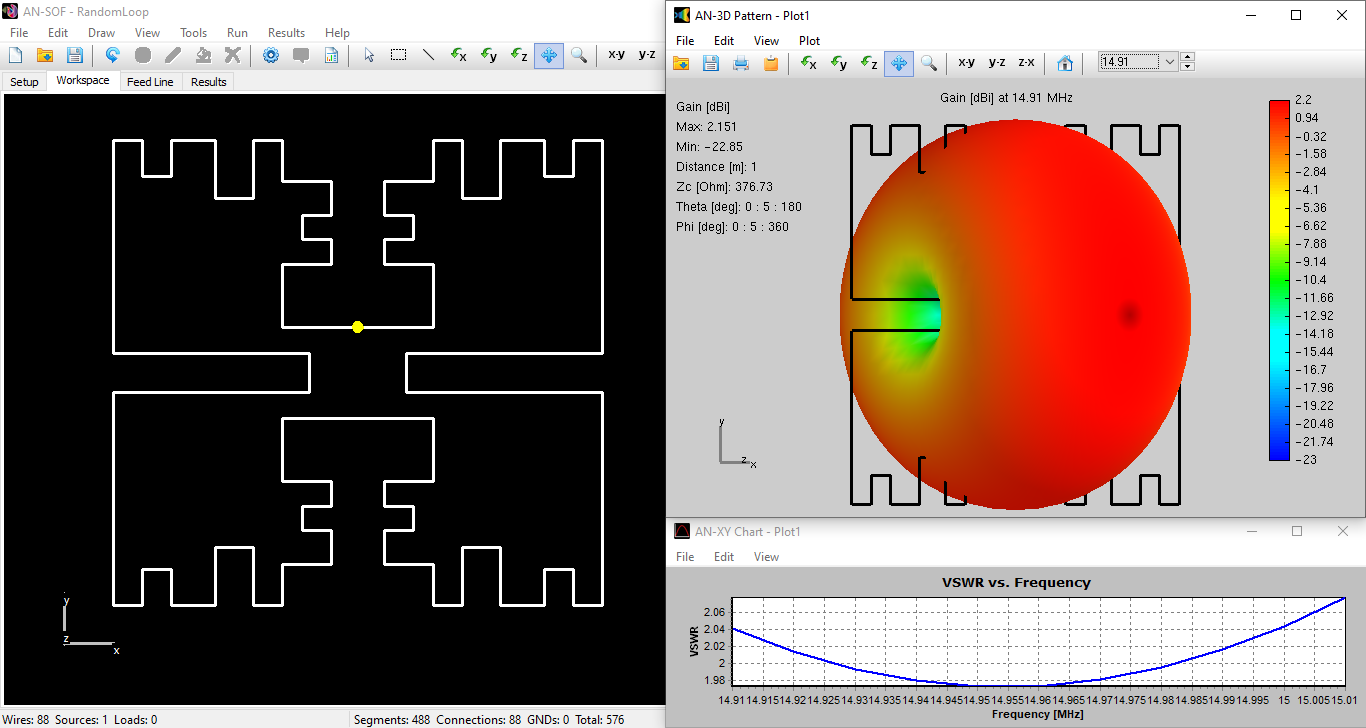
Fractal vs. Arbitrary Geometry: Analyzing the VE9SRB “Random” Loop
Is fractal geometry truly necessary for compact antenna performance? We analyze the VE9SRB ‘Random’ Loop an arbitrarily shaped antenna with the same wire length and aperture as an MI2 Fractal Loop. Using AN-SOF, we demonstrate that while random shapes can achieve comparable gain and impedance, the fractal geometry offers a critical advantage in usable bandwidth.
-
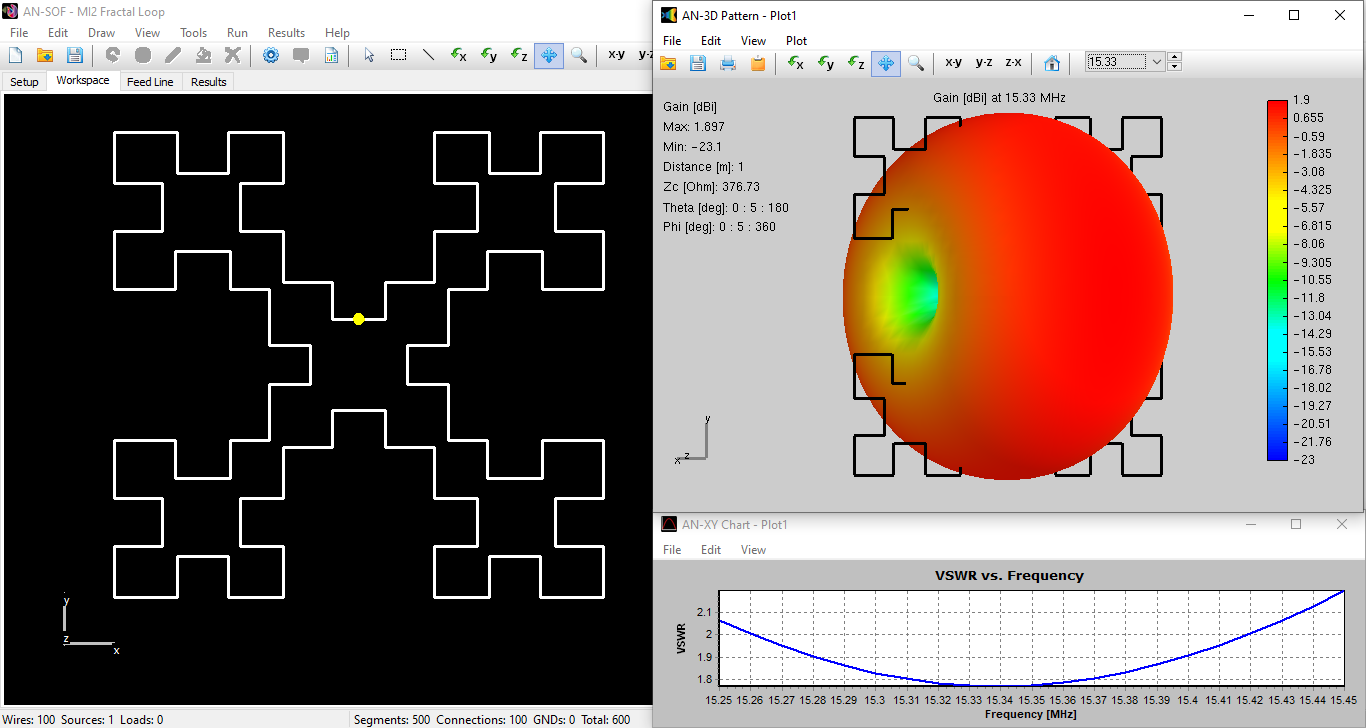
The MI2 Fractal Loop: Achieving Resonant Efficiency in Compact Apertures
Discover the power of space-filling curves through this analysis of the MI2 Fractal Loop antenna. Modeled in AN-SOF, this HF ‘Snowflake Quad’ achieves a resonant resistance and a 2 dBi gain. Learn how fractal iterations enable significant size reduction in HF antennas without the efficiency losses typical of standard small loops.
-
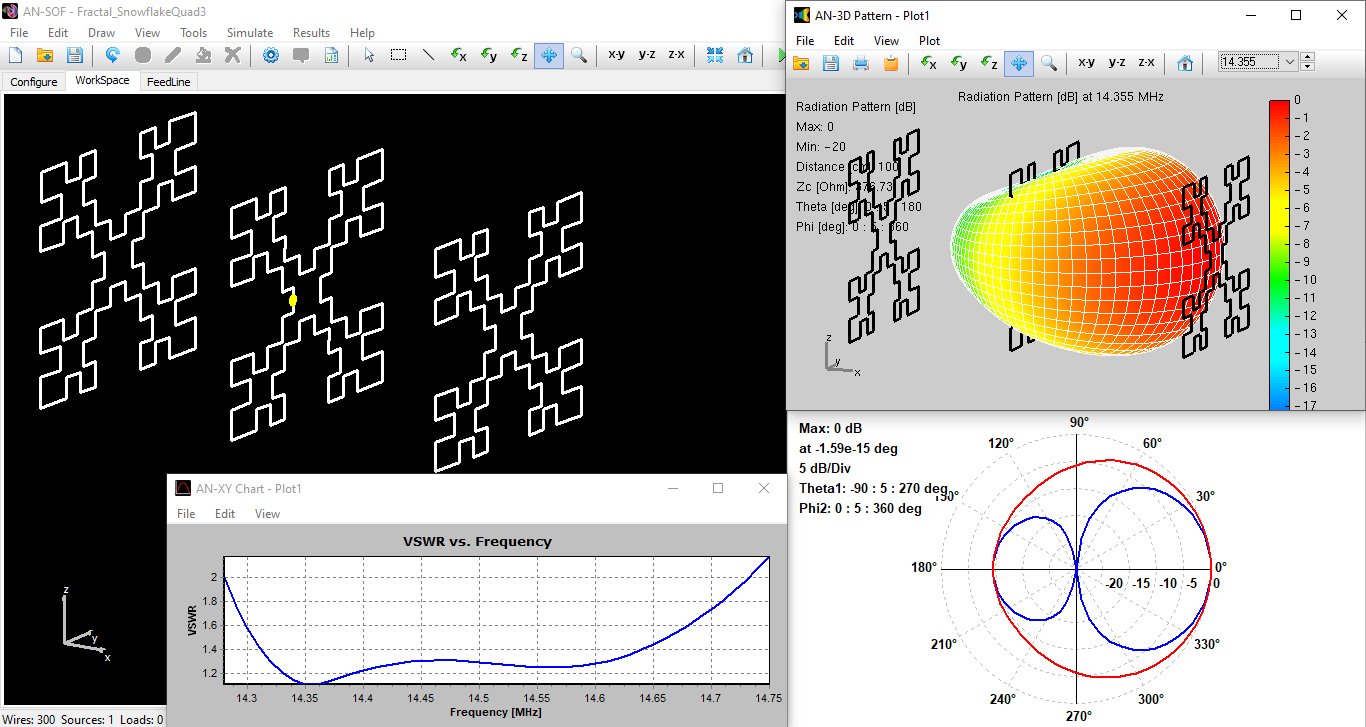
AN-SOF in Action: Modeling and Understanding the Performance of Fractal Antennas
Dive into the fascinating world of fractal antennas! This article explores their revolutionary design principles using AN-SOF simulation software. Discover how self-similar patterns unlock wider bandwidths, smaller sizes, and superior efficiency compared to traditional antennas.
-
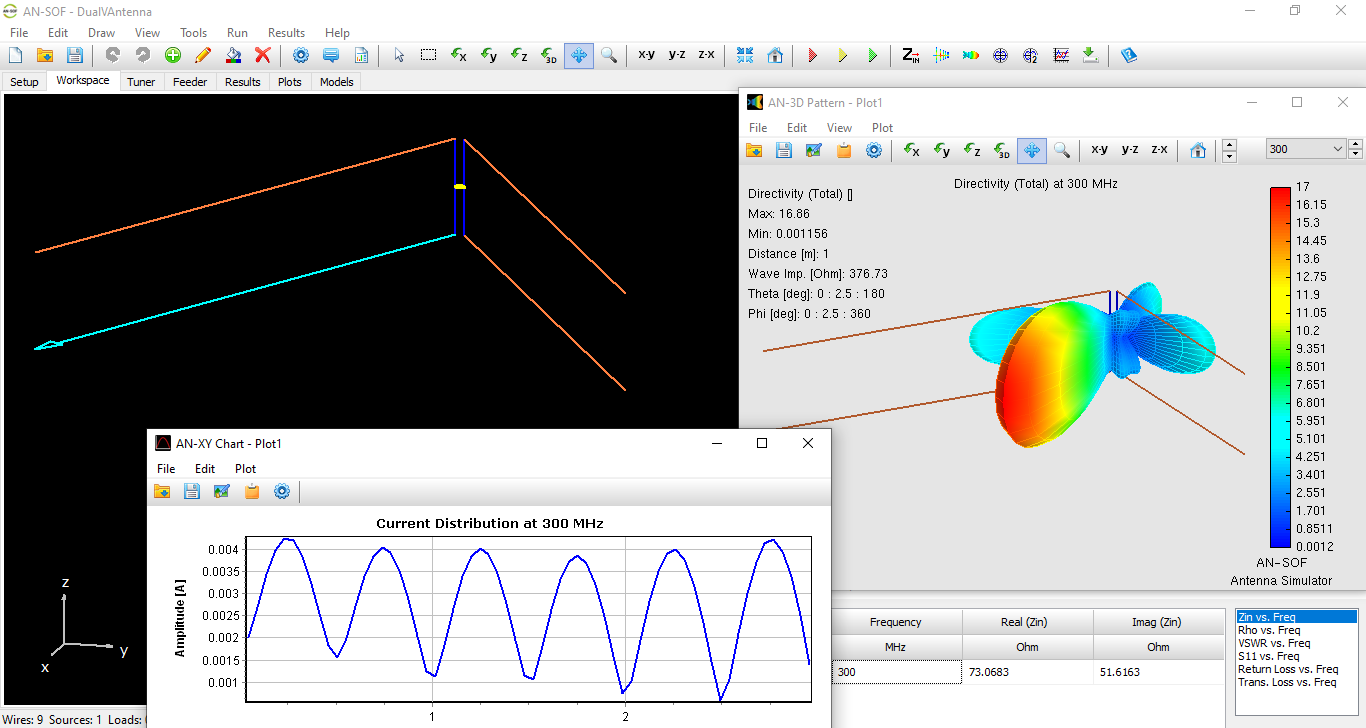
Boosting Performance with Dual V Antennas: A Practical Design and Simulation
Learn how stacking two V antennas can boost directivity. This article presents a practical Dual V Antenna design and explains how to scale it for any frequency. Includes simulation insights and a link to an online calculator.
-
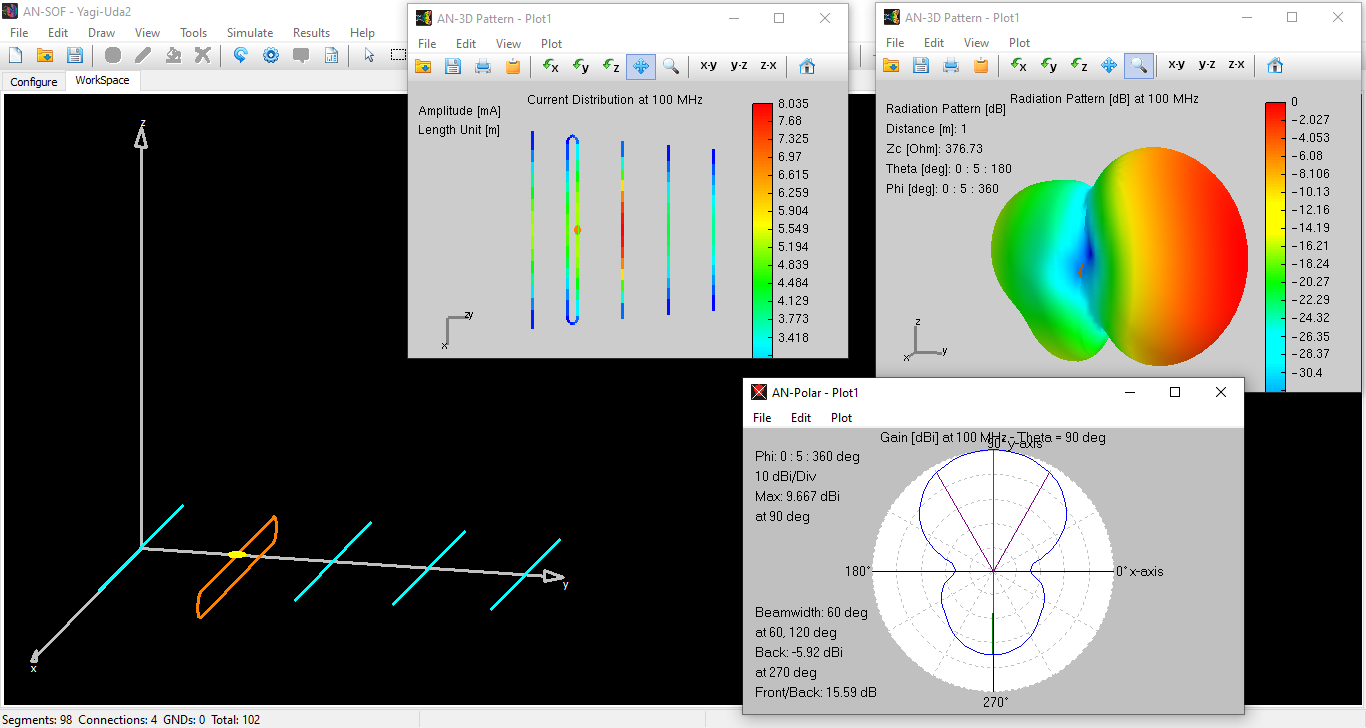
Introduction to Yagi-Uda Arrays: Analyzing a 5-Element Beam with a Folded Dipole Driver
Learn the fundamentals of Yagi-Uda arrays with this introductory model. This simulation features a folded dipole driver with arced ends, illustrating how parasitic elements shape a highly directional 9.7 dBi beam and achieve a 15 dB Front-to-Back ratio. This baseline design provides the perfect foundation for mastering antenna feeding, tuning, and optimization using AN-SOF.
-

Experimenting with Half-Wave Square Loops: Simulation and Practical Insights
Explore the unique behavior of half-wave square loop antennas through AN-SOF simulations. Learn how conductor length affects current distribution and radiation patterns, with practical experiments to validate theory. Download our template to test configurations yourself!
-
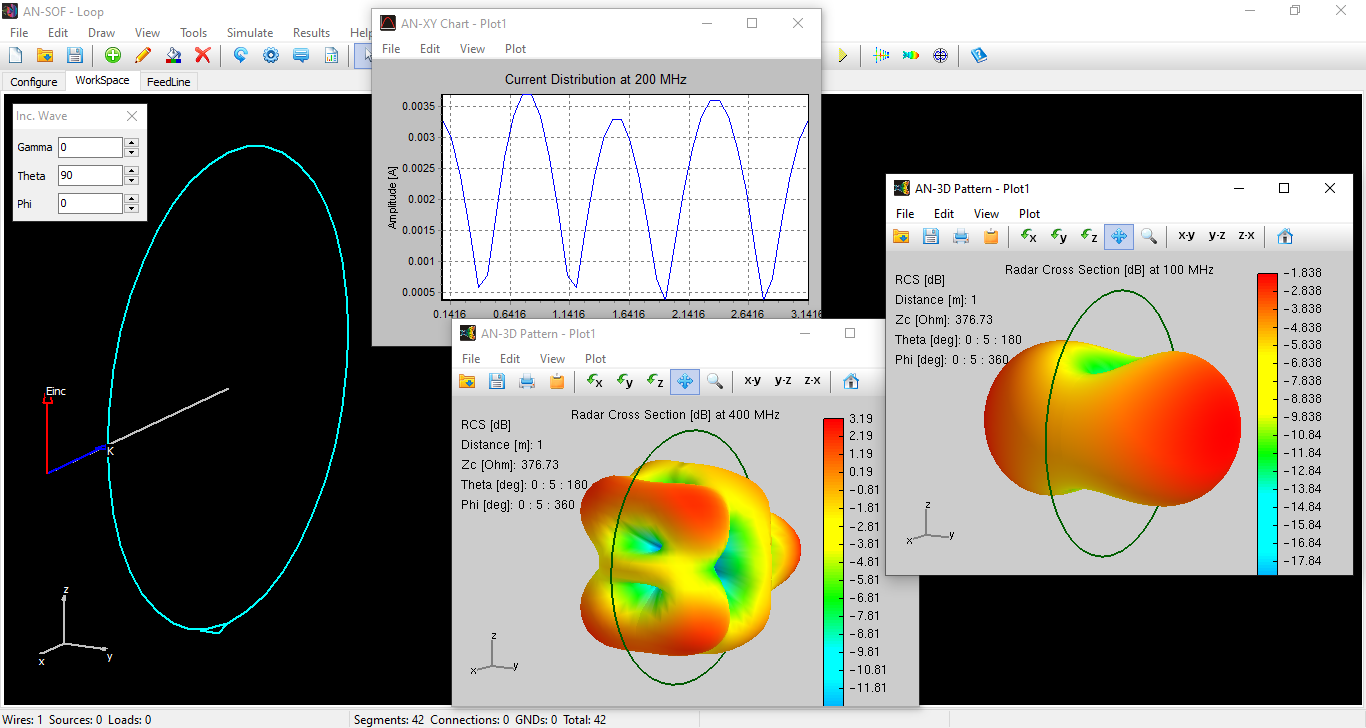
Radar Cross Section and Reception Characteristics of a Passive Loop Antenna: A Simulation Study
This article analyzes radar cross section (RCS) and reception properties of a passive loop antenna via full-wave simulation. We demonstrate how loop resonance manifests in both RCS patterns and load voltage characteristics.
-
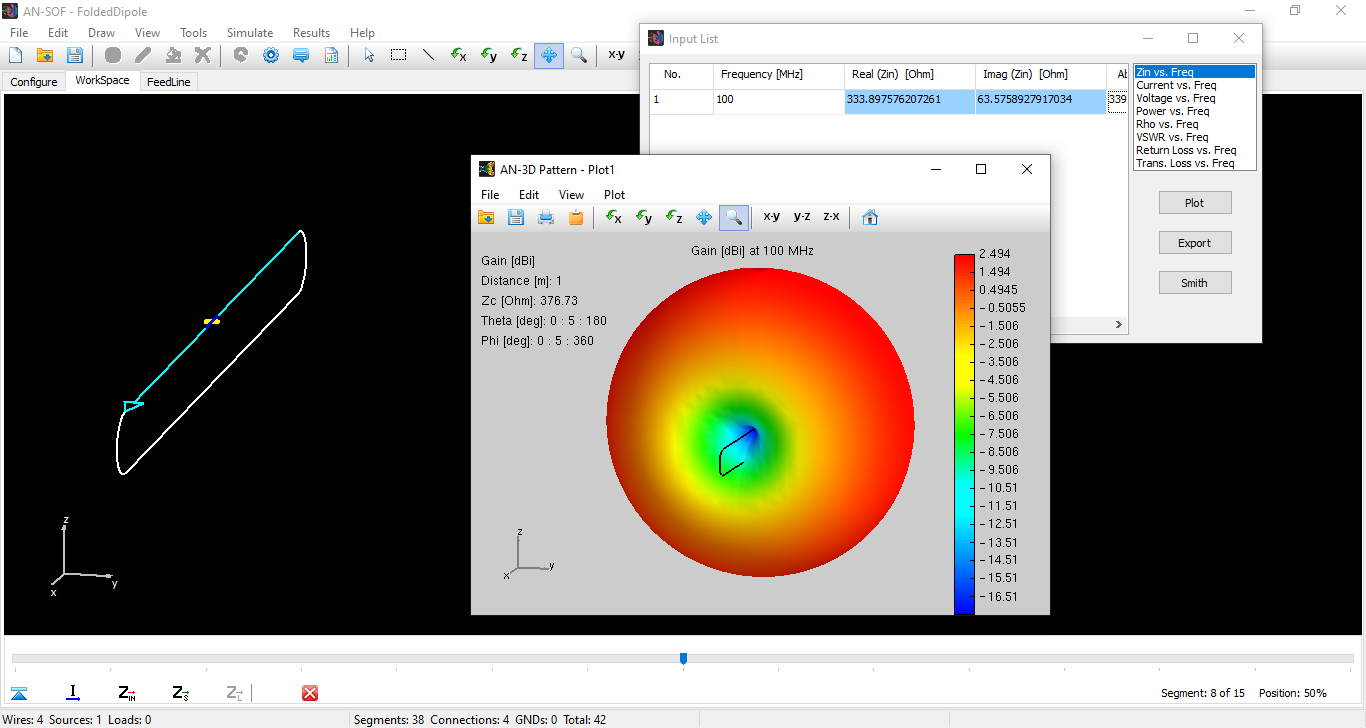
Understanding the Folded Dipole: Structure, Impedance, and Simulation
Explore the fundamentals of folded dipole antennas. Learn how accurate simulations using conformal modeling in AN-SOF reveal the true behavior of curved wire geometries and confirm the expected input impedance.
-
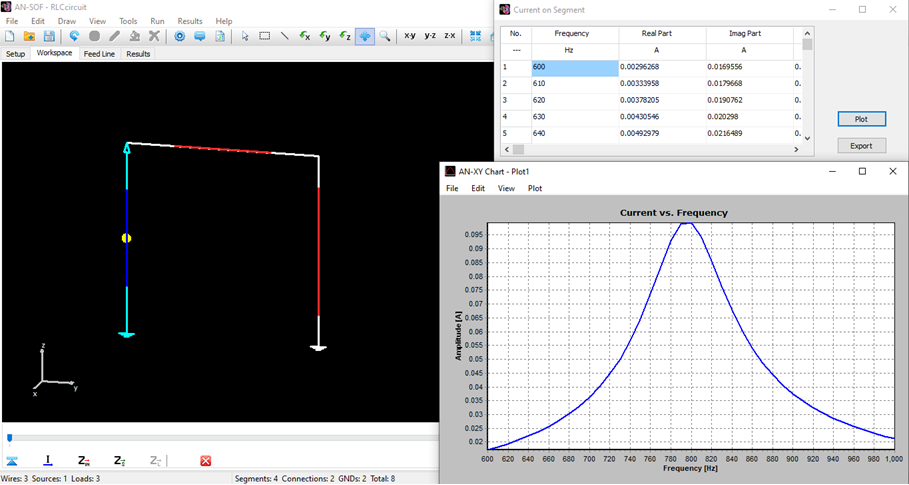
Circuit Theory Validation: Simulating an RLC Series Resonator
Validate the high-precision numerical stability of AN-SOF at the extreme low-frequency limit. This article details a simulation of a series RLC circuit designed to resonate at 800 Hz, where the wavelength is 375 kilometers. By comparing the simulated current peaks against classical circuit theory formulas, we demonstrate that the AN-SOF engine maintains its accuracy even…
-
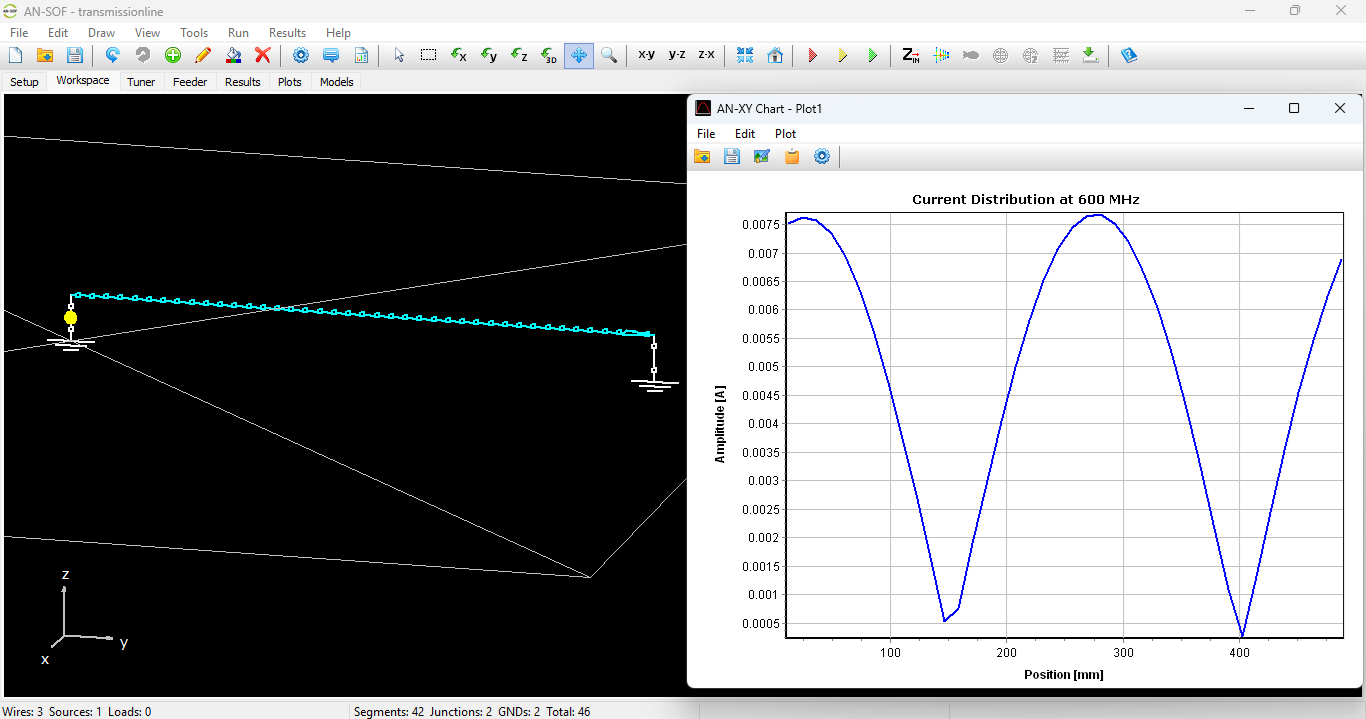
Validating Numerical Methods: Transmission Line Theory and AN-SOF Modeling
Validate AN-SOF numerical results against classical transmission line theory in this detailed study of a wire-over-ground-plane system. By utilizing the short-circuit and open-circuit impedance technique, we demonstrate how simulated data correlates with standard characteristic impedance formulas. This article provides a step-by-step procedure for modeling lines in the AN-SOF workspace and highlights the engine’s precision in…
-
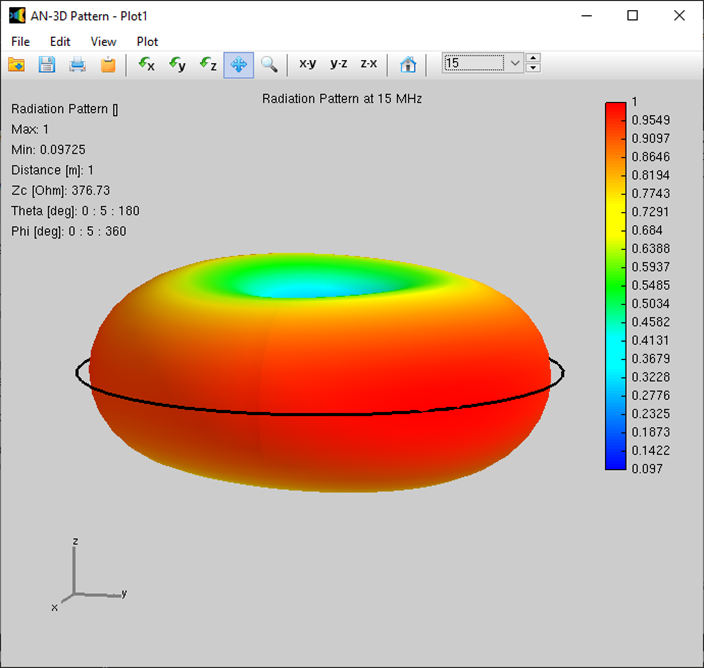
Modeling a Circular Loop Antenna in AN-SOF: A Step-by-Step Guide
This step-by-step guide empowers you to simulate circular loop antennas in AN-SOF. We’ll configure the software, define loop geometry, and explore how its size relative to wavelength affects radiation patterns and input resistance. Gain valuable insights into this fundamental antenna type!
-
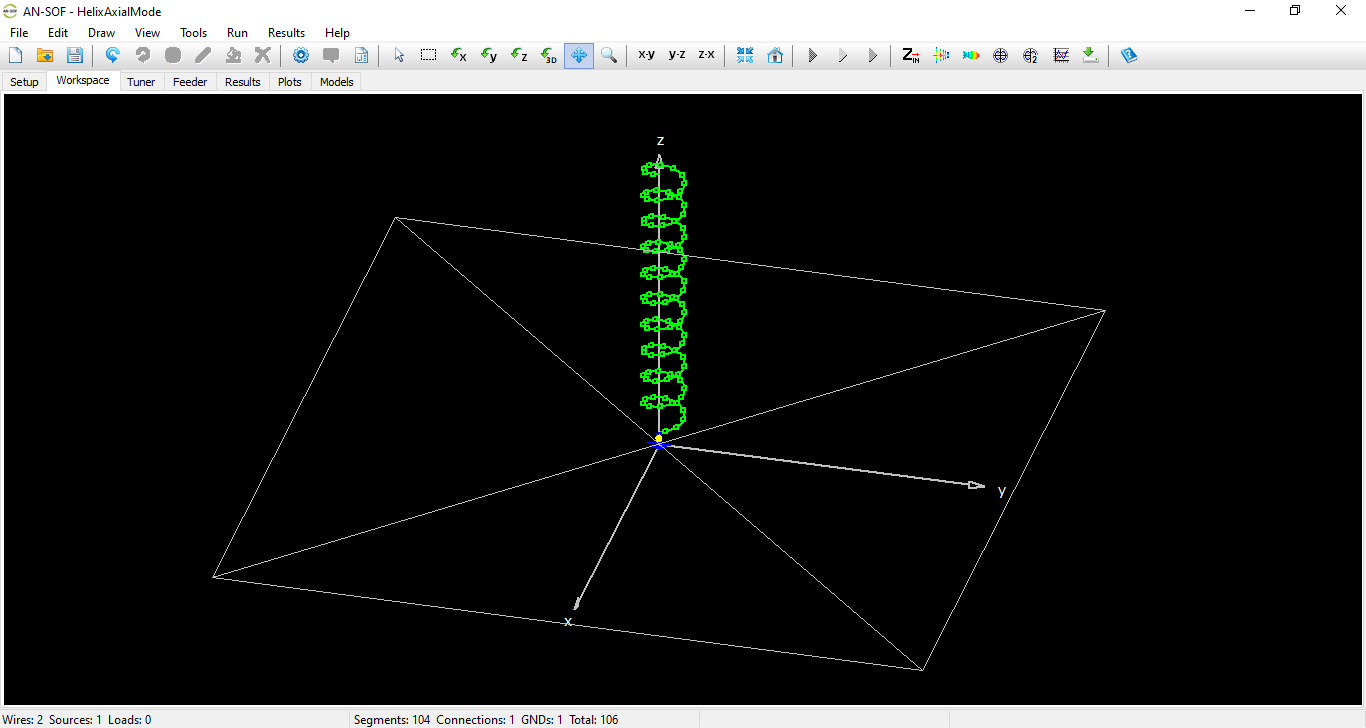
Modeling Helix Antennas in Axial Radiation Mode Using AN-SOF
Perfect for Beginners: Quick Guide to Helix Antenna Simulation. Master axial-mode helix design in AN-SOF with this easy step-by-step tutorial. Learn ground plane setup, helix creation, and radiation pattern analysis. Start modeling professional antennas today!
-
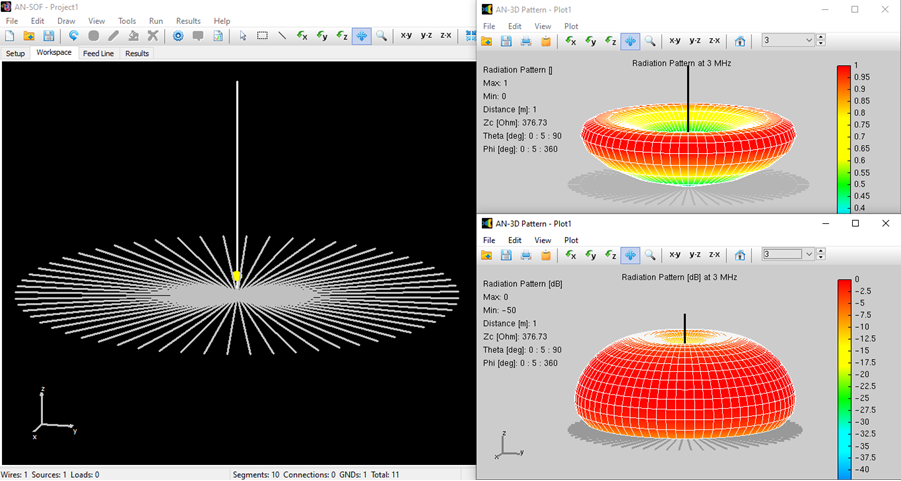
Monopole Antennas Over Imperfect Ground: Modeling and Analysis with AN-SOF
Explore the design and simulation of monopole antennas over imperfect ground using AN-SOF. Learn how ground conditions impact performance and optimize efficiency for LF/MF broadcasting applications.
-
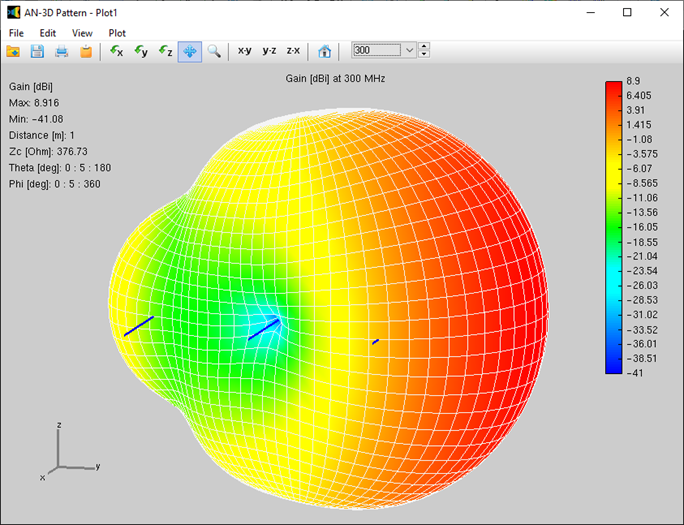
Step-by-Step: Modeling Basic Yagi-Uda Arrays for Beginners
Master Yagi-Uda simulation in AN-SOF! This quick guide walks you through modeling a 3-element array (reflector, driven element, director). Analyze radiation patterns with professional results.
Join a Global Community of RF Experts
Our technical insights are trusted by engineers and antenna enthusiasts at top-tier firms and research institutions. See how they use AN-SOF →