Search for answers or browse our Knowledge Base.
Guides | Models | Validation | Book
The 7 Limitations of Traditional MoM — and Why Measurement-Grade Conformal MoM Exists
Traditional Method of Moments codes still carry geometric and numerical constraints that degrade accuracy on the antennas professionals actually design. Conformal MoM with Exact Kernel removes them.
Introduction
Most antenna designers still work inside the limitations of traditional Method of Moments (MoM) formulations: linear segment approximations and the thin-wire kernel. These constraints were acceptable decades ago. They are no longer acceptable when the structures that matter most (helices, close-spaced elements, tapered sections, elevated radials, thick wires, and antennas near real ground) expose the weaknesses.
Measurement-Grade Conformal MoM is the technical class that eliminates those constraints. It is defined by two non-negotiable elements: conformal (curved) segments that follow the true geometry and an Exact Kernel that removes the thin-wire approximation.
AN-SOF is currently the only commercial platform built from the ground up on this formulation.
Below are the seven classic limitations of traditional MoM, the practical consequences each one creates, and how Conformal MoM with Exact Kernel resolves them.
The 7 Limitations of Traditional MoM
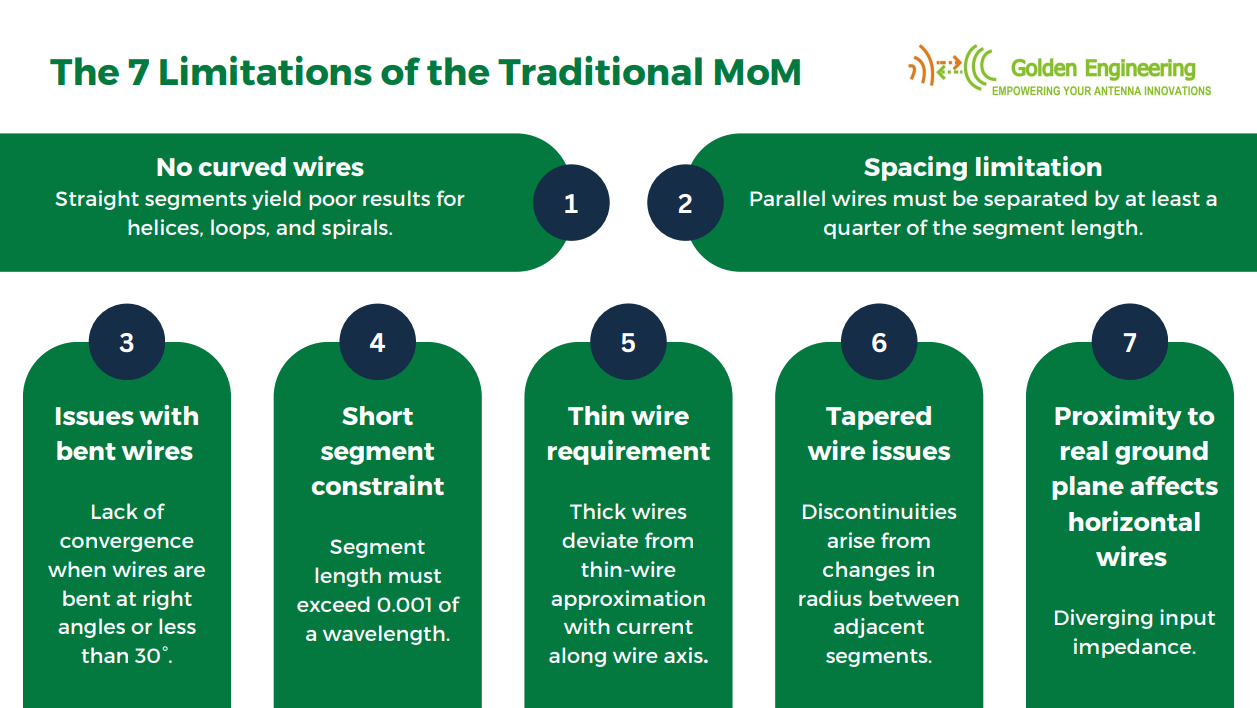
1. No true curved wires
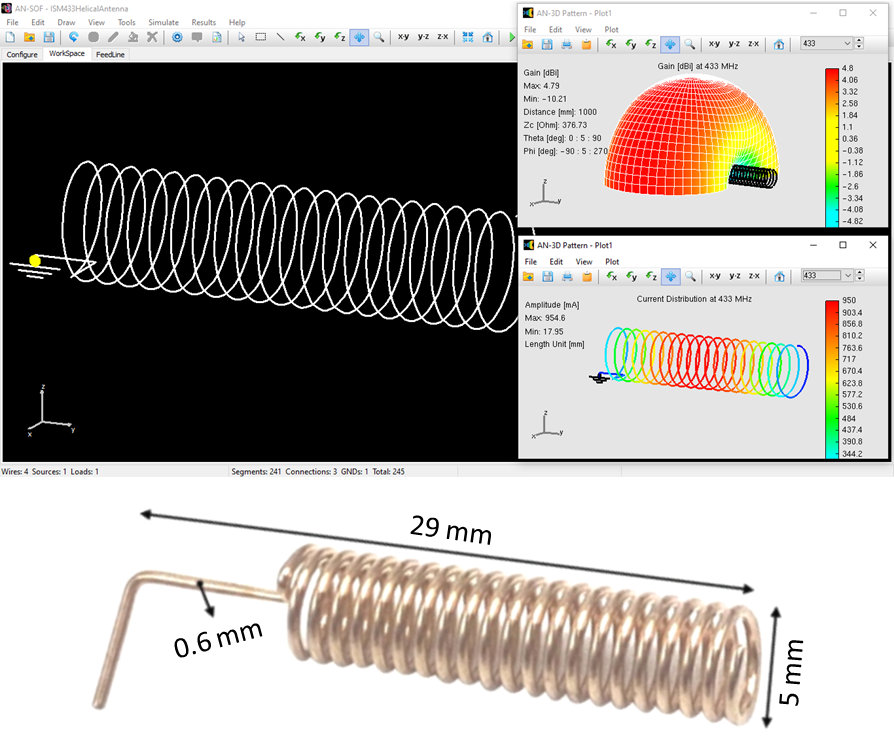
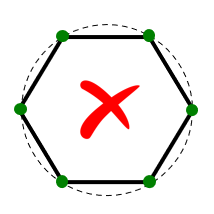
Traditional codes force geometry onto straight segments. Helices, loops, spirals, and any smoothly curved structure are approximated by piecewise linear elements. The result is geometric error that grows with curvature and directly affects current distribution and radiation patterns.
Conformal MoM solution: Segments follow the actual curve. Geometry fidelity is preserved, so current and fields are computed on the real structure rather than on a faceted approximation.
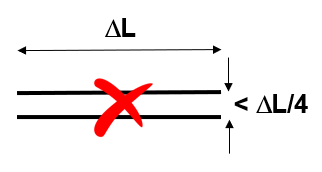
2. Wire spacing limitation
Parallel wires must normally be separated by at least a quarter of the segment length. This restriction makes accurate modeling of closely spaced transmission lines, tightly wound helices, and compact arrays difficult or impossible without artificial compromises.
Conformal MoM solution: The Exact Kernel and conformal formulation remove the artificial separation rule, allowing realistic modeling of tightly spaced conductors.
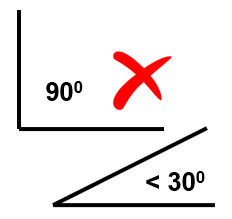
3. Convergence problems at bends
Wires bent at right angles or acute angles (especially below 30°) frequently produce poor convergence or non-physical results in traditional codes. Wire-grid models and structures with sharp corners are particularly affected.
Conformal MoM solution: Improved junction and basis-function treatment yields stable, convergent solutions even at sharp bends and complex junctions.
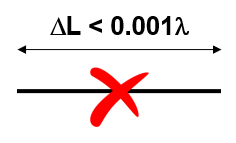
4. Short-segment constraint
Segment length is typically required to exceed ~0.001 λ. This prevents accurate modeling of electrically small features and non-radiating circuits in the quasi-static regime.
Conformal MoM solution: The formulation supports significantly shorter segments, enabling precise treatment of fine geometric detail and low-frequency or quasi-static behavior.
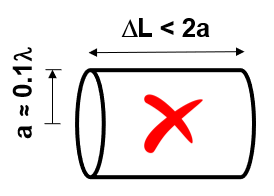
5. Thin-wire approximation
Traditional codes assume current flows only along the wire axis. Thick wires violate this assumption. Surface current effects become important and the thin-wire kernel introduces error.
Conformal MoM solution: The Exact Kernel accounts for the finite radius correctly, restoring accuracy for thick and moderately thick conductors.
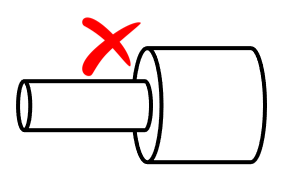
6. Stepped-radius discontinuities
Abrupt changes in wire radius between adjacent segments create non-physical discontinuities in traditional models. Tapered dipoles, stepped-radius elements, and practical feed structures suffer.
Conformal MoM solution: Proper handling of radius transitions eliminates the artificial discontinuities and produces continuous, physical current distributions.
7. Proximity to lossy ground
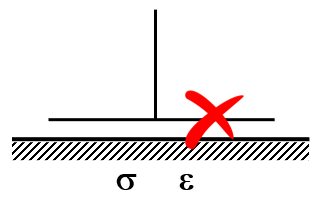
Horizontal wires close to a real (lossy) ground plane, especially elevated radials and monopoles above ground screens, often produce diverging input impedance and incorrect efficiency in classical formulations.
Conformal MoM solution: Accurate ground treatment (including advanced models such as the James R. Wait formulation where applicable) restores stable impedance and realistic efficiency predictions for antennas near real ground.
Why This Constitutes a Distinct Technical Class
These seven limitations are not minor implementation details. They are structural consequences of linear geometry approximations and the thin-wire kernel. Any tool still built on those foundations inherits the same constraints, regardless of interface improvements or added post-processing.
Measurement-Grade Conformal MoM is defined by the removal of exactly these constraints. The practical outcome is higher geometric fidelity, more reliable current distributions, and results that more consistently approach measurement-grade accuracy on the complex wire, helical, and ground-plane structures that matter to working professionals.
AN-SOF implements this class directly: conformal segments + Exact Kernel + specialized ground modeling, delivered with lifetime licensing economics rather than enterprise overhead.
Who This Matters To
- RF engineers and consultants who design or optimize wire, helical, broadcast, and ground-plane antennas.
- Researchers who require validation against theory and measurements.
- Professionals who have already encountered the accuracy ceiling of legacy MoM tools on real geometries.
- Teams that need professional-grade results without six-figure simulation seats.
Next Steps
Experience the difference on a geometry that traditional tools struggle with.
Measurement-Grade Conformal MoM is not a marketing phrase. It is a technical boundary. The seven limitations above mark the line between the old class of tools and the new one.
See Also:
Technical Keywords: Conformal Method of Moments, Exact Kernel, thin-wire approximation, curved segments, measurement-grade accuracy, wire spacing limitations, bent wire convergence, short segment constraint, tapered wire discontinuities, lossy ground modeling.